
How to Send Money from Qatar to India, Pakistan, Nepal & Philippines
How to send money from Qatar through banks, QCB-licensed exchange houses and wallets, how to compare the real cost, and what recipients in India, Pakistan, Nepal and the Philippines need.

Quick Answer
From Qatar you can send money abroad through your bank, a QCB-licensed exchange house, or a QCB-authorized wallet that sends through a licensed exchange house or bank. Fawran is for payments inside Qatar only. Compare providers by the amount the recipient receives for the same total in riyals, not by the advertised fee.
- Choose how the recipient will be paid: bank deposit, cash pickup or wallet.
- Ask two or three licensed providers for a quote on the same total in riyals, within the same hour.
- Compare the amount the recipient will receive, not the headline fee or rate.
- Check the recipient's details against their bank record or ID before you pay.
- Keep the receipt or reference number to track the transfer.
On this page
- Who is allowed to send money abroad from Qatar
- Ways to send money from Qatar compared
- How to compare the real cost of a transfer
- What the recipient needs in each country
- Documents you will be asked for
- Sending money at a branch
- Sending money through an app
- Delivery time, tracking and failed transfers
- Cancellations, refunds and complaints
- Next steps
Most people in Qatar send money home through one of three routes: a transfer from their Qatar bank account, an exchange house (at a branch or in its app), or a mobile wallet that sends abroad through a licensed partner. All three are regulated by Qatar Central Bank (QCB), and none of them is automatically the cheapest. The amount your family actually receives depends on the fee, the exchange rate you are offered and how the money is paid out.
This guide explains who is allowed to send money abroad from Qatar, how the channels differ, how to compare the real cost, and what the recipient needs in India, Pakistan, Nepal and the Philippines. It does not rank or recommend any provider.
QatarVia is an independent guide. We are not affiliated with QCB, any bank, exchange house or wallet provider, and we do not process transfers.
Who is allowed to send money abroad from Qatar
QCB supervises exchange houses through its Other Financial Institutions Supervision Department. Under QCB's Payment Services Regulation (in force since 15 September 2021), a payment service provider may only offer cross-border money transfers if it holds an exchange house license from QCB. Providers licensed for e-money accounts and domestic transfers may let their customers send money abroad, but only through licensed exchange houses or local banks.
In practice, that means a legitimate international transfer from Qatar goes through a Qatar bank, a QCB-licensed exchange house, or a QCB-authorized wallet that passes the transfer to one of them. QCB's list of providers for Qatar Mobile Payment names Ooredoo Money and ipay among the authorized wallet providers.
QCB does not appear to publish a single online register of licensed exchange houses by name, so ask the branch or app to confirm its QCB license before you register. Never hand cash to an individual or a social media "agent" who offers a better rate: only licensed exchange houses and banks may move money across borders.
Ways to send money from Qatar compared
The channels below work for all four countries in this guide. What differs between providers is the fee, the rate and the payout options in each country, so check those for your own transfer.
| Channel | How it works | Usual payout | What to check |
|---|---|---|---|
| Bank transfer from your Qatar account | Online banking, the bank app or a branch, paid from your own account | Recipient's bank account | Fee, the rate shown before you confirm, charges by intermediary or receiving banks, cut-off times |
| Exchange house branch | Pay at the counter with your ID; no Qatar bank account needed | Bank deposit, cash pickup and, with some providers, mobile wallets | QCB license, the exact amount the recipient will receive, receipt and reference number |
| Exchange house app | Register and verify your identity, then pay from a supported card or account | Bank deposit, cash pickup, sometimes wallets | Accepted funding methods, fee plus rate, transfer limits, cancellation terms |
| Mobile wallet (QCB-authorized) | The wallet sends abroad through a licensed exchange house or bank | Depends on the partner | Which licensed partner handles the transfer, total cost, delivery window |
| Cash pickup | Sent from an exchange house to a collection point abroad | Cash collected by the recipient | Pickup locations near the recipient, name matching their ID exactly, reference number |
Fawran, QCB's instant payment service, and Qatar Mobile Payment are for payments inside Qatar. QNA's report on the Fawran launch describes it as a way to send and receive money within the country, so it is not a route for sending money abroad.
How to compare the real cost of a transfer
An advertised fee or rate on its own tells you little. These are the parts that change what the recipient gets:
- Sender fee, charged in Qatar.
- Exchange-rate margin, the gap between the rate you are offered and the mid-market rate. It is not itemized on the receipt and is often larger than the fee.
- Funding charges, for example from your card issuer when you pay by card.
- Deductions on the receiving side by an intermediary or the recipient's bank.
- Offer conditions, since zero-fee or better-rate offers can be limited to a first transfer, a minimum amount or one country.
The fair way to compare is by the amount received. Ask two or three providers for a quote on the same total in riyals, for the same payout method and within the same hour, then compare:
Effective rate = amount the recipient receives ÷ total riyals you pay (including fees).
For example, with made-up round numbers that are not real quotes: if you pay QAR 1,000 in total and one provider delivers 22,000 units of local currency while another delivers 21,800, the first gives an effective rate of 22.0 and the second 21.8, whatever their advertised fees. Check today's reference rate on our converters for India, Pakistan, Nepal and the Philippines to see how far a quote is from the mid-market rate.

What the recipient needs in each country
Most failed or returned transfers come from recipient details that do not match. Get them from the recipient's bank app, passbook or ID rather than from memory.
India
For a bank deposit you need the account holder's name exactly as the bank holds it, the account number and the IFSC code of that branch. An IFSC for the right bank but the wrong branch is a common reason for returns. For cash pickup, the recipient's name must match their government ID. Today's reference rate is on our QAR to INR converter.
Pakistan
For a bank deposit the recipient's IBAN matters most, together with the name exactly as the bank holds it. Wallet payouts usually need the registered mobile number and a matching name. Wallet and instant-payment options differ between providers, so confirm the payout method before you pay. See the QAR to PKR converter for today's reference rate.
Nepal
For a bank deposit you need the bank name, branch, account number and the beneficiary's name as the bank holds it. For cash pickup, check which collection points are near the recipient, as coverage differs by provider and district. The QAR to NPR converter shows today's reference rate.
The Philippines
For a bank deposit you need the account number and the name as the bank holds it. For cash pickup, the name on the recipient's government ID must match the transfer exactly, including middle names where the ID shows them. Mobile wallet payout is not offered by every provider, so check before you register. The QAR to PHP converter shows today's reference rate.
Documents you will be asked for
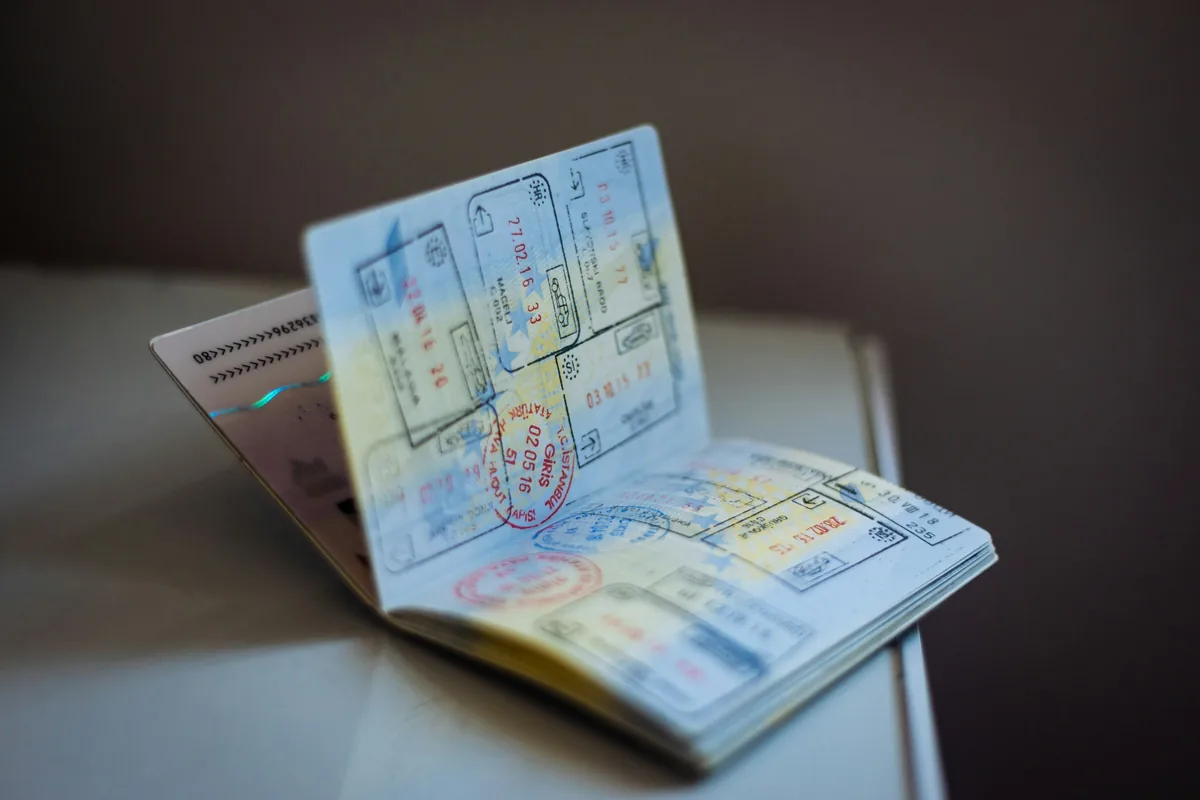
Each provider sets its own identity checks, so confirm before you go. Residents are normally asked for their Qatar ID. For Qatar Mobile Payment wallets, QCB states that citizens and residents register with their QID, while visitors need a passport and entry visa and may open only one wallet.
An expired QID will stop registration, so check your Qatar ID status first and see the Qatar ID renewal guide if it has lapsed. For larger or unusual transfers, expect questions about the source of funds and keep a salary certificate or bank statement to hand.
Sending money at a branch
- Bring your original, valid Qatar ID (visitors: passport and visa).
- Tell the teller the country, the payout method and the total riyals you want to spend.
- Ask for the fee, the rate and the exact amount the recipient will receive, and compare it with another quote before paying.
- Give the recipient's details and check the spelling against their ID or bank record.
- Pay, then check the printed receipt before you leave.
- Keep the receipt: its reference number is needed for cash collection and for tracing the transfer.
Sending money through an app
- Register with your mobile number and Qatar ID. Some providers verify you in the app, others ask for a first visit to a branch.
- Wait for your account to be approved before adding a recipient.
- Add the recipient with their details exactly as the receiving bank or wallet holds them.
- Review the fee, the rate and the amount the recipient will receive together before you confirm.
- Pay with a funding method the app accepts, then keep the transfer reference.
Delivery time, tracking and failed transfers
"Instant" usually applies only to some receiving banks and eligible transfers. Cut-off times, weekends and public holidays in Qatar and in the receiving country can add a day or more, and a first transfer to a new recipient may be held for checks. Use the reference number to track the transfer with the provider.
If details are wrong, the transfer is usually returned rather than lost, but a return can take days and may come back reduced by charges and a second currency conversion.
Cancellations, refunds and complaints
Whether a transfer can be cancelled depends on the provider's terms and on whether the money has already been paid out. Once it has been collected or credited, it generally cannot be reversed. Ask before you pay when cancellation stops being possible and what would be refunded.
Raise any problem with the provider first, using its official contact details. If it is not resolved, QCB's Customer Protection Department receives complaints about financial institutions on 8000700 or by email at cp@qcb.gov.qa.
Next steps
Pick the channel that suits how your family receives money, get two or three quotes for the same amount and payout method, and compare what will arrive, not the advertised fee. If you are planning regular transfers from your salary, our average salary in Qatar guide explains the difference between basic pay and allowances.
Featured image: Photo by Kyle Glenn on Unsplash.
Last reviewed: 27 October 2026. Fees, rates and payout options change often; always confirm the quote with the provider before you pay.
Official Sources
- QCB: Other Financial Institutions Supervision Department (opens in a new tab)QCB department that supervises exchange houses and finance companies.
- QCB: Payment Services Regulation (2021, PDF) (opens in a new tab)Section 5: cross-border money transfers require an exchange house license; wallet providers may send abroad only through licensed exchange houses or local banks.
- QCB: Customer Protection Department (opens in a new tab)Complaints about financial institutions: 8000700, cp@qcb.gov.qa.
- QCB: Retail payment systems (opens in a new tab)QCB's domestic payment systems, including the Fawran instant payment system.
- QCB: Qatar Mobile Payment (opens in a new tab)Wallet registration rules (QID for citizens and residents; passport and visa for visitors) and the list of authorized providers.
- QNA: QCB launches Fawran instant payment service (7 March 2024) (opens in a new tab)Fawran lets bank customers send and receive money within Qatar instantly.
Frequently Asked Questions
What is the safest way to send money from Qatar?
Use a Qatar bank, a QCB-licensed exchange house, or a QCB-authorized wallet. Under QCB's Payment Services Regulation, cross-border transfers may only be offered by holders of an exchange house license, and wallet providers send abroad through licensed exchange houses or banks.
Can I use Fawran to send money abroad?
No. Fawran is QCB's instant payment service for sending and receiving money within Qatar. For transfers abroad, use a bank, a licensed exchange house or an authorized wallet.
Can I send money abroad from a mobile wallet in Qatar?
Yes, if the wallet provider is authorized by QCB and offers it. The transfer abroad is carried out through a licensed exchange house or a local bank, so check which partner handles it and what it costs.
Which exchange house gives the best rate in Qatar?
No single provider is always best. Rates and fees change during the day and differ by country and payout method, so ask two or three providers for a quote on the same amount and compare what the recipient will receive.
Can I send money without a Qatar bank account?
Yes. At an exchange house branch you can pay in cash with your ID. Apps usually need a supported card or account to fund the transfer.
Is a zero-fee transfer always cheaper?
Not necessarily. A weaker exchange rate can cost more than the fee it replaces, so compare the amount the recipient receives for the same total in riyals.
How do I complain about a money transfer?
Contact the provider first through its official channels. If the problem is not resolved, contact QCB's Customer Protection Department on 8000700 or at cp@qcb.gov.qa.
Can I cancel a transfer after paying?
It depends on the provider's terms and on whether the money has been paid out. Once it has been collected or credited, it generally cannot be reversed, so ask about cancellation before you pay.
Published by
QatarViaQatarVia is a personal informational website owned and published by Baber Ali. Guides explain official processes and everyday life in Qatar in plain language and list the sources they rely on.
How guides are sourced and updated →Related guides

Teaching Jobs in Qatar 2026: Schools, Salary, Requirements & Visa
Where Qatar schools recruit teachers, what advertised salaries and packages actually show, how B.Ed, PGCE, QTS and TEFL differ, and how atte

Best Job Sites in Qatar 2026: Qatar Living, Mzad, Indeed, Bayt & LinkedIn (Safe Guide)
A practical comparison of the five job sites most used in Qatar: who each suits, how applications work, what is free and what is paid, and h

Government & Semi-Government Jobs in Qatar: QF, HMC, PHCC, Ashghal, Ooredoo (How to Apply)
Where to find genuine vacancies at Qatar Foundation, HMC, PHCC, Ashghal and Ooredoo, which applicant route fits you, who can use Kawader, an
Driver Jobs in Qatar 2026: Salary, License Needed & How to Apply
What driver jobs in Qatar actually pay according to dated ads, which Qatar license and extra permits each role needs, how overseas licenses