Qatar Currency: Riyal Notes, Exchange Rate and Money Tips (2026)
A practical guide to the Qatari riyal: the 3.64 dollar peg, the fifth series banknotes and their 2025 and 2026 updates, coins, old and damaged notes, cards vs cash, Fawran, where to exchange money, tipping and the QR50,000 customs rule.
Quick Answer
Qatar's currency is the Qatari riyal (QAR or QR), divided into 100 dirhams and issued by Qatar Central Bank. It is pegged to the US dollar at QR3.64 per dollar, so QR100 is about USD 27.47. Current banknotes are the fifth series (QR1, 5, 10, 50, 100, 200 and 500), in use since December 2020, with updated designs of some notes from 2025 that are equally valid. Travelers must declare cash or gold worth QR50,000 or more when entering or leaving Qatar.
See current banknotes on Qatar Central Bank (official site) (opens in a new tab)On this page
- Qatar Currency at a Glance
- Is the Qatari Riyal Pegged to the US Dollar?
- Qatar Banknotes: Quick Reference for the Fifth Series
- Are Old Qatari Riyal Notes Still Valid?
- Qatari Coins: What Dirhams Are Still Used?
- How to Check a Note, and What to Do With Torn or Damaged Money
- Cards or Cash: How People Actually Pay in Qatar
- Digital Payments in Qatar: Fawran, Himyan, Apple Pay and Google Pay
- Best Way to Get Qatari Riyals: Exchange House vs Bank vs Airport vs ATM
- Sending Money Home From Qatar
- Gold Prices in Qatari Riyals
- How Much Cash Can You Carry Into or Out of Qatar?
- Tipping in Qatar
- Common Problems and Fixes
- Final Thoughts
The currency of Qatar is the Qatari riyal (code QAR, written QR or ر.ق), and each riyal is divided into 100 dirhams. It is fixed to the US dollar at 3.64 riyals per dollar, so one riyal is worth about 27.5 US cents, and that rate does not move from day to day.
Below: the notes in your wallet right now (including the redesigned 2025 and 2026 versions), what to do with an old or torn note, the cheapest way to get riyals, and how much cash you can carry through the airport. QatarVia is an independent guide, not Qatar Central Bank or any bank.
Qatar Currency at a Glance
| Detail | Information |
|---|---|
| Name | Qatari riyal (Arabic: ريال قطري) |
| Code and symbols | QAR (ISO code); QR or ر.ق on price tags and receipts |
| Subunit | 1 riyal = 100 dirhams |
| Issued by | Qatar Central Bank (QCB) |
| Exchange rate system | Fixed to the US dollar at USD 1 = QAR 3.64 |
| Banknotes | QR1, QR5, QR10, QR50, QR100, QR200, QR500 (fifth series) |
| Coins | 1, 5, 10, 25 and 50 dirhams; mostly 25 and 50 seen in change |
| Current series | Fifth series, in circulation since 18 December 2020, with updated designs from 2025 |
| Cash declaration | Declare QR50,000 or more (or equivalent) when entering or leaving Qatar |
Is the Qatari Riyal Pegged to the US Dollar?
Yes. Qatar Central Bank fixes the riyal at QR3.64 per US dollar, a peg made official by Amiri Decree No. 34, issued in July 2001. That decree replaced an earlier 1975 link to the IMF's special drawing rights. In practice, one dollar always buys about QR3.64 inside Qatar, and QR100 is about USD 27.47.
The decree sets a narrow band: QCB buys dollars from banks at no more than QR3.6385 and sells at no more than QR3.6415. Banks and exchange houses add a small margin for the public, so a counter will buy your dollars slightly below 3.64 and sell slightly above it. Even during the 2017 diplomatic crisis, when offshore traders briefly quoted the riyal weaker, the rate inside Qatar held (QCB, as reported by Gulf Times).
Because of the peg, your riyal moves against the rupee, peso or euro only as much as the dollar does. A handy mental shortcut: divide a riyal price by 3.64 to get dollars, or multiply by 0.275.
| Qatari riyals | US dollars (at 3.64) | US dollars | Qatari riyals |
|---|---|---|---|
| QR1 | USD 0.27 | USD 1 | QR3.64 |
| QR100 | USD 27.47 | USD 20 | QR72.80 |
| QR500 | USD 137.36 | USD 100 | QR364 |
| QR1,000 | USD 274.73 | USD 500 | QR1,820 |
| QR50,000 | USD 13,736 | USD 1,000 | QR3,640 |
Qatar Banknotes: Quick Reference for the Fifth Series
QCB unveiled the fifth series on 13 December 2020 and released it into circulation on Qatar National Day, 18 December 2020, first through ATMs. It redesigned every denomination and added a brand new QR200 note to fill the gap between QR100 and QR500. QCB officials said each note carries between 38 and 64 security and technical features.
| Note | What QCB lists as the featured design | Worth knowing |
|---|---|---|
| QR1 | Traditional dhow (bateel) and the Oyster and Pearl Monument | Redesigned edition issued July 2025; older edition still valid |
| QR5 | Desert scene with Arabian horse, camel, oryx, ghaf tree and a hair tent | Updated edition announced June 2026; older edition still valid |
| QR10 | Lusail Stadium, the Torch Tower at Aspire Zone, Sidra Medicine and Education City | Updated edition announced June 2026; older edition still valid |
| QR50 | Qatar Central Bank and Ministry of Finance buildings | Updated edition announced June 2026; older edition still valid |
| QR100 | Abu Al Qubaib Mosque | No updated edition announced yet |
| QR200 | Palace of Sheikh Abdullah bin Jassim Al Thani, National Museum of Qatar and Museum of Islamic Art | New denomination in 2020; no update announced yet |
| QR500 | Ras Laffan LNG facility and an LNG carrier ship | Carries an extra optical security stripe; no update announced yet |
Why your notes may look slightly different: the 2025 and 2026 updates
Most guides online still describe one design per note. In fact, QCB has started refreshing the fifth series. On 2 July 2025 it announced a revised QR1 note, and in June 2026 it extended the same changes to the QR5, QR10 and QR50. The changes are small: an updated State of Qatar emblem, a revised denomination numeral and a new issue date printed on the note. QCB's own current banknotes page links to a side by side leaflet for each one.
The important part: both versions are legal tender. QCB said the earlier fifth series editions stay in circulation with no effect on their validity, and that the same changes will reach other denominations later, with no date given. If a shop refuses an older fifth series QR50 because it looks different from a new one, it is still valid money.
The QR22 World Cup note
In November 2022 QCB issued a commemorative QR22 polymer note for the FIFA World Cup. It is legal tender at 22 riyals, but it was sold through banks and exchange houses for QR75, so do not spend one at face value.
Are Old Qatari Riyal Notes Still Valid?
No, not for spending. The fourth series (first issued in 2003, revised in 2007) stopped being legal tender after 1 July 2021. Under QCB Governor's Decision No. 99 of 2020, published on 27 December 2020, holders keep the right to recover the value from Qatar Central Bank for up to 10 years from that withdrawal decision.
Banks stopped swapping fourth series notes over the counter at the end of 2021, so if you find some in an old suitcase, contact QCB directly rather than a bank branch. Based on the decision date, that window runs to around the end of 2030, but confirm with QCB before you rely on it. Earlier series are long out of circulation.
| Series | First issued | Can you spend it today? |
|---|---|---|
| First | 1973 | No. Withdrawn |
| Second | 1983 | No. Withdrawn |
| Third | 1996 | No. Withdrawn |
| Fourth (A and B) | 2003, revised 2007 | No. Not legal tender since 1 July 2021; value claimable from QCB within the 10 year window |
| Fifth, original designs | 18 December 2020 | Yes |
| Fifth, updated designs | QR1 from July 2025; QR5, QR10, QR50 from June 2026 | Yes |
| QR22 commemorative | November 2022 | Yes, at face value of QR22 |
Qatari Coins: What Dirhams Are Still Used?
Qatar issues coins of 1, 5, 10, 25 and 50 dirhams, where 100 dirhams make one riyal. In daily life you will almost only see the 25 and 50 dirham coins, usually in supermarket change. The smaller coins remain legal tender but are rarely handed out. There is no riyal coin; the smallest riyal amount is the QR1 note.
Keep a few coins and QR1 notes for small grocery runs and the karak stall.
How to Check a Note, and What to Do With Torn or Damaged Money
For a quick everyday check, compare a suspicious note with one you know is genuine. Feel the paper and the raised print, look for the security thread, and tilt the note: QR50 to QR500 notes have holographic patches that shift as you move them, and the QR500 has an extra optical security stripe. QCB requires banks to use counterfeit detectors and UV lamps on doubtful notes.
If you think you have been given a fake note, do not try to spend it. Take it to your bank, explain where you got it, and let them handle it. Knowingly passing on a fake note is a crime.
Torn and damaged notes are a different matter, and almost nobody explains the rules. QCB's instructions to banks on damaged banknotes set out what you get back:
| Condition of the note | What QCB pays |
|---|---|
| At least three quarters of the note is present | Full face value |
| Serial and reference numbers present in full, or only partly missing | Full face value |
| Only half of the note is present | Half the face value |
| Deliberately torn, pierced, written or drawn on | QCB may confiscate it with no payment |
| Burned | Paid by QCB only with an official report from the security authorities stating the value and cause |
- Put all the pieces in an envelope. Do not tape over the serial numbers.
- Take it to a branch of your own bank. The bank coordinates with QCB before paying.
- For burned cash, get the official report from the authorities first, then approach QCB.
- Never write phone numbers or notes on banknotes. It can cost you the whole value.
Cards or Cash: How People Actually Pay in Qatar
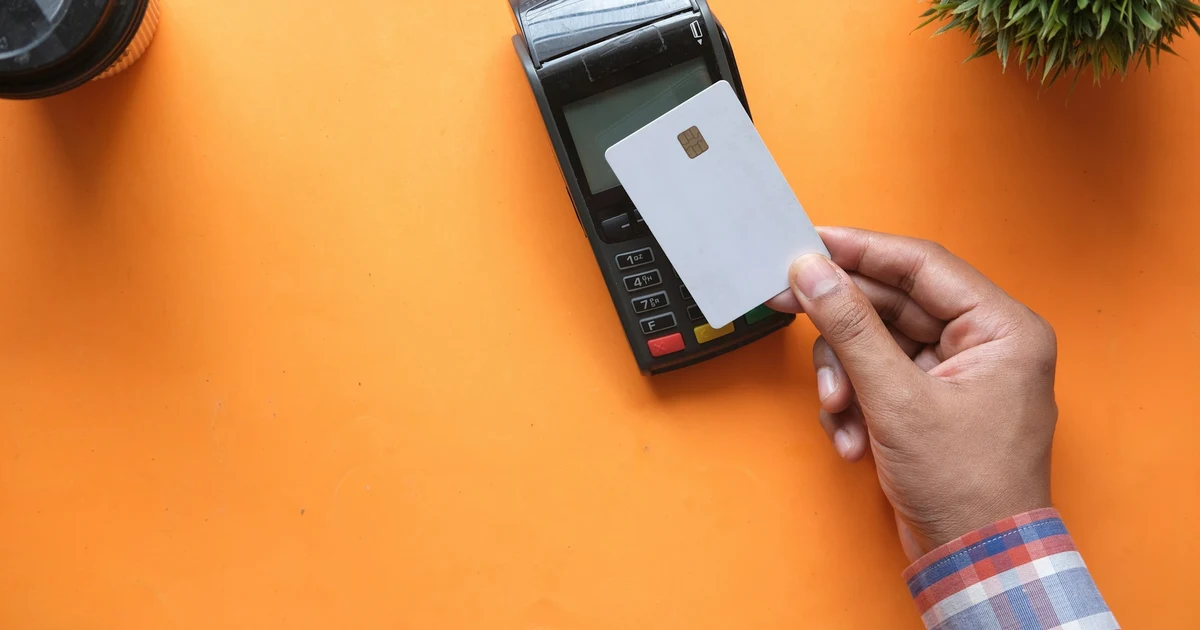
Cards win. Supermarkets, malls, restaurants, fuel stations and almost every chain accept Visa and Mastercard, and tap to pay is normal. Apple Pay launched in Qatar in August 2021 and Google Pay in August 2022, so a phone works almost everywhere a card does, including Karwa taxis. Cash is still handy for small souq stalls, cafeterias, tips and older corner shops; our Souq Waqif guide notes the market has around ten bank ATMs if you run short. US dollars are not used as everyday money, so change them.
Local debit cards run on NAPS, the national ATM and point of sale network, and pay online through the QPay gateway. Some local payment pages offer a NAPS debit option next to credit cards, so newcomers with only a home country card may see the odd online payment fail until their Qatar bank account is open.
Digital Payments in Qatar: Fawran, Himyan, Apple Pay and Google Pay
Fawran is Qatar Central Bank's instant payment service, launched on 7 March 2024. You send riyals to anyone with a bank account in Qatar using their mobile number or an alias instead of an IBAN, it runs 24/7, and you see the recipient's name before you confirm. QCB caps a single transfer at QR50,000, and each bank sets its own lower limit (QNA).
- Fawran: found inside your bank's mobile app. It works only in Qatari riyals and only between accounts in Qatar, so it is for paying your landlord or splitting a dinner bill, not for sending money home. Fees, if any, are set by each bank.
- Himyan: Qatar's national prepaid card, owned by QCB and issued through local banks, with no minimum balance and free first issuance. It runs on NAPS and QPay, and QCB said in November 2024 that it would become the card for payments at government agencies in phases from February 2025. Ask your bank if you pay many government fees.
- Apple Pay and Google Pay: supported by the major Qatari banks; visitors pay their home bank's foreign fees as usual.
Best Way to Get Qatari Riyals: Exchange House vs Bank vs Airport vs ATM
The best option for most people is a bank ATM with a low fee card, or a licensed exchange house in the city. Keep airport counters for a small first amount. With the dollar rate fixed, any difference comes from margins and fees.
| Option | Best for | Rate and fees | Watch out for |
|---|---|---|---|
| Bank ATM in Qatar | Visitors with a low fee card; residents | Your home bank's rate plus any ATM and card fees | Choose to be charged in QAR, not your home currency |
| Exchange house (city or mall) | Changing cash; sending money home | Often the most competitive cash rates; compare boards | Count the cash at the counter and keep the receipt |
| Bank branch | Residents with an account; large sums | Close to the peg for USD; other currencies vary | Ask for the rate on non-dollar currencies before you hand over cash |
| Airport exchange counter | The first QR100 to QR300 on arrival | Generally wider margin than city exchange houses | Changing your whole trip budget here |
| Paying in Qatar with a foreign card | Everyday shopping | Card network rate plus your bank's foreign fee | Dynamic currency conversion on the terminal |
At Hamad International Airport, the official airport guide lists 13 foreign exchange stores run by Travelex and Al Dar. In arrivals there is a Travelex counter in baggage claim near the end of Belt 3, another in the arrivals hall meet and greet area next to Al Maha Lounge, and an Al Dar counter inside the Bus Pavilion. ATMs sit on the arrivals level before and after customs, and some dispense several currencies. Our Hamad Airport arrivals guide covers the rest of the walk from the gate to the taxi rank.
How to get riyals with the least loss
- Before flying, ask your bank about foreign ATM and card fees, and tell it you are traveling.
- Change or withdraw only QR100 to QR300 at the airport for a taxi, a SIM card and a first meal.
- When an ATM or card terminal offers to charge you in your home currency, decline and choose QAR.
- For larger amounts, compare two or three exchange houses on the same day. With dollars, the difference is small; with euros, pounds or rupees, it can be noticeable.
- Keep small notes (QR5, QR10, QR50) for souqs, karak and tips. For a short visit, QR200 to QR300 in cash is usually plenty.
Sending Money Home From Qatar
For most expats, the riyal's real test is payday remittance. Exchange houses, banks and wallet apps each quote their own rate, so the real cost is the amount your family receives, not the fee on the receipt. Our comparison of exchange houses for sending money from Qatar explains how to compare quotes, transfer limits and payout options.
Use the converters below to see today's mid-market reference rate before you go to the counter. If the rate you are offered is far below it, ask another exchange house.
| Home country | Currency | Converter |
|---|---|---|
| India | Indian rupee (INR) | QAR to INR converter |
| Pakistan | Pakistani rupee (PKR) | QAR to PKR converter |
| Philippines | Philippine peso (PHP) | QAR to PHP converter |
| Bangladesh | Bangladeshi taka (BDT) | QAR to BDT converter |
| Nepal | Nepalese rupee (NPR) | QAR to NPR converter |
| Sri Lanka | Sri Lankan rupee (LKR) | QAR to LKR converter |
| Kenya | Kenyan shilling (KES) | QAR to KES converter |
All of these, plus the live gold rate, sit together on our Qatar money tools page, which is easy to bookmark on your phone for payday.
Gold Prices in Qatari Riyals
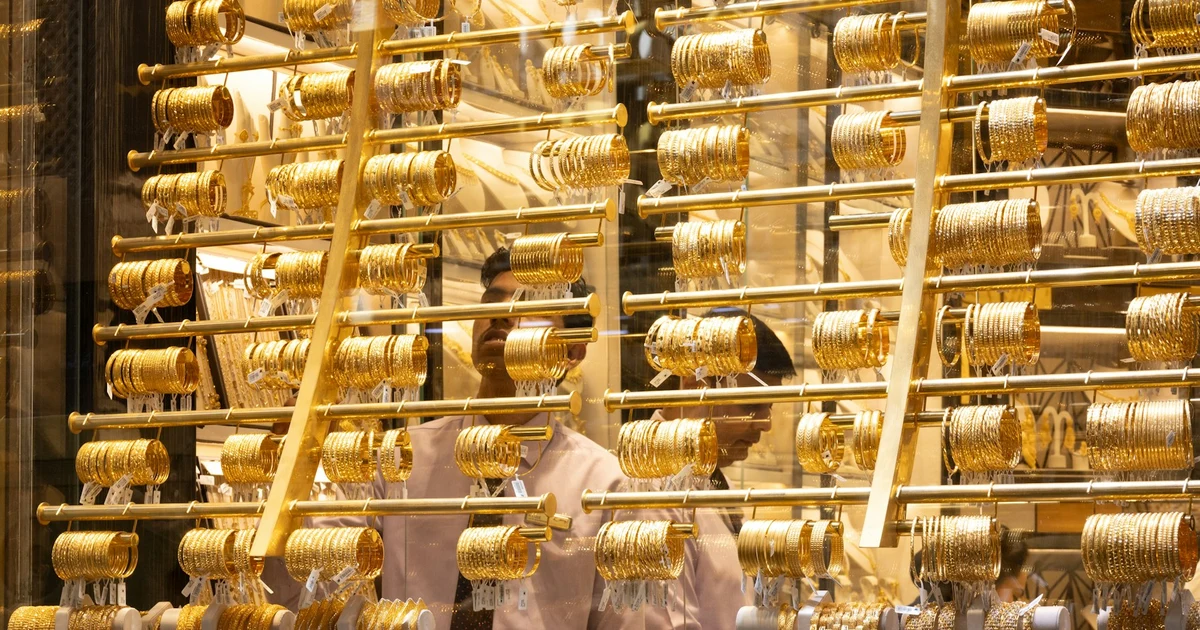
Gold in Qatar is priced per gram in riyals, usually quoted for 24, 22, 21 and 18 karat. Because the riyal is pegged, the base price is simple: take the international spot price in dollars per troy ounce, multiply by 3.64, and divide by 31.1035 to get the 24 karat price per gram in riyals. For 22 karat, multiply that by 22 and divide by 24.
Jewelers then add making charges, which vary by design and shop, so two bangles of the same weight can be priced quite differently. Check the gold rate in Qatar today before you walk into a shop, ask for the weight and the making charge as separate figures, and keep the invoice. If you fly out with a lot of jewelry or bullion, remember that gold counts toward the customs declaration limit below.
How Much Cash Can You Carry Into or Out of Qatar?
There is no fixed maximum, but you must declare cash, bearer instruments such as traveler's checks, precious metals or precious stones worth QR50,000 or more, or the equivalent in foreign currency, when you enter or leave Qatar. You fill in a declaration form with the General Authority of Customs at the airport, seaport or land border (Gulf Times).
The rule comes from Law No. 20 of 2019 on anti-money laundering. Declaring is a disclosure, not a tax, though you may be asked where the money came from. QR50,000 is only about USD 13,736, so savings plus wedding gold can cross the line without anyone realizing. Failing to declare, or giving false information, can lead to seizure of the money, and Customs has said penalties can reach up to three years in prison or a fine of QR100,000 to QR500,000 or twice the amount, whichever is greater.
Tipping in Qatar
Tipping in Qatar is appreciated but not required, and there is no fixed rule. Check restaurant bills first, because many already include a service charge. Where none is added, around 10 percent for good table service is common, and small cash tips for delivery riders, hotel porters and car wash staff are normal.
- Restaurants and cafés: 10 percent if there is no service charge; leave cash if you want it to reach the waiter directly.
- Taxis and ride hailing: rounding up or adding a few riyals is enough.
- Food delivery: QR5 to QR10 is generous, more in the summer heat.
- Hotel porters and valets: a few riyals per bag or per car.
Common Problems and Fixes
| Problem | What to do |
|---|---|
| A shop refuses an older fifth series note | Both the original and updated fifth series notes are legal tender. Politely say so, or pay by card and swap the note at your bank. |
| You find fourth series notes at home | They cannot be spent or changed at bank counters. Contact Qatar Central Bank about recovering the value within the 10 year window. |
| A note is torn or damaged | Take all pieces to your bank. Three quarters or more gets full value; half gets half value. |
| A government or utility payment rejects your foreign card | Use a local debit card (NAPS), a Qatar credit card, or ask your bank about Himyan. |
| You sent a Fawran transfer to the wrong person | Contact your bank immediately through its official channels. Always check the name Fawran shows before you confirm. |
Final Thoughts
The Qatari riyal is about as predictable as a currency gets: a 3.64 dollar peg since 2001, modern notes that are hard to fake, and card or phone payments almost everywhere. What catches people out are the small things, like a damaged note thrown away when it could have been refunded, or a gold and cash total that quietly crosses QR50,000 at the airport.
Keep a few small notes in your wallet, choose QAR on every card terminal, and check a converter before you send money home.
Featured image: Photo by Dean Zhang on Unsplash.
Sources
- Qatar Central Bank: Current Banknotes (opens in a new tab)QCB's list of the fifth series notes and their designs, with leaflets on the 2025 and 2026 design updates.
- Qatar Central Bank: History of Banknotes (opens in a new tab)Official history of Qatar's currency from the Gulf rupee to the fifth series, with the year of each issue.
- Qatar Central Bank: QR5 design update leaflet (2026) (opens in a new tab)QCB leaflet showing the changes to the emblem, numeral and issue date on the updated fifth series notes.
- Qatar Central Bank: Instructions to Banks, Part III (opens in a new tab)QCB rules on repaying torn, damaged and burned banknotes and on counterfeit detection at banks.
- QNA: QCB launches Fawran instant payment service (opens in a new tab)Qatar News Agency report on the March 2024 launch of Fawran, its features and the QR50,000 transfer cap.
- Hamad International Airport: Facilities (opens in a new tab)Official list of ATMs and the Travelex and Al Dar foreign exchange counters in the terminal.
- Gulf Times: Customs declaration for cash and goods over QR50,000 (opens in a new tab)Report on the General Authority of Customs rules for declaring cash, bearer instruments, precious metals and stones.
- Gulf Times: Qatari riyal trading close to fixed peg rate, says QCB (opens in a new tab)QCB statement on the QR3.64 peg and Amiri Decree No. 34 of 2001.
Frequently Asked Questions
What is the currency of Qatar?
Qatar's currency is the Qatari riyal, with the code QAR and the local abbreviation QR. One riyal is divided into 100 dirhams. Qatar Central Bank issues the currency, and the banknotes in use today are the fifth series: QR1, QR5, QR10, QR50, QR100, QR200 and QR500. Coins come in 1, 5, 10, 25 and 50 dirhams.
How much is 1 Qatari riyal in US dollars?
One Qatari riyal is worth about 0.2747 US dollars, because the riyal is fixed at QR3.64 per dollar under a 2001 Amiri decree. That means QR100 is about USD 27.47 and USD 100 is QR364. Banks and exchange houses add a small margin, so the rate you are offered will be slightly different from the official peg.
Does Qatar have a 200 riyal note?
Yes. The QR200 note was introduced with the fifth series in December 2020 to bridge the gap between the QR100 and QR500 notes. It shows the Palace of Sheikh Abdullah bin Jassim Al Thani, the National Museum of Qatar and the Museum of Islamic Art. It is fully legal tender and dispensed by many ATMs.
Are old Qatari riyal notes still valid?
The fourth series notes stopped being legal tender after 1 July 2021, so shops and bank counters will not accept them. Qatar Central Bank allows holders to recover their value within 10 years of the December 2020 withdrawal decision, so contact QCB directly. Fifth series notes, both the original 2020 designs and the updated 2025 and 2026 designs, are valid.
Can I use US dollars in Qatar?
Everyday prices in Qatar are in riyals, and shops, taxis and restaurants expect riyals or a card. Change your dollars at an exchange house or bank, or withdraw riyals from an ATM. Because the riyal is pegged at 3.64 to the dollar, you lose very little when converting, as long as you avoid high airport margins on large amounts.
How much cash can I bring into Qatar?
There is no fixed limit, but you must declare cash, traveler's checks and similar instruments, gold, other precious metals or precious stones worth QR50,000 or more, or the foreign currency equivalent, when entering or leaving Qatar. Fill in the customs declaration form at the airport, seaport or land border. Not declaring can lead to seizure, fines and possible prison.
Is tipping expected in Qatar?
Tipping is appreciated but not mandatory in Qatar. Check restaurant bills for a service charge first. If none is added, around 10 percent for good table service is common. For taxis, rounding up is enough, and a few riyals for delivery riders, hotel porters and valets is normal. Cash tips are the most likely to reach the person directly.
What is Fawran in Qatar?
Fawran is Qatar Central Bank's instant payment service, launched in March 2024. Through your bank's app you can send riyals to another bank account in Qatar using a mobile number or alias, 24 hours a day, and you see the recipient's name before confirming. QCB caps a transfer at QR50,000, and each bank sets its own lower limits and fees.
What should I do with a torn Qatari banknote?
Take all the pieces to your bank. Under Qatar Central Bank rules, you get full value if at least three quarters of the note is present or the serial numbers are intact, and half value if only half remains. Notes deliberately written on, pierced or defaced can be confiscated without payment, and burned notes need an official report.
Published by
QatarViaQatarVia is a personal informational website owned and published by Baber Ali. Guides explain official processes and everyday life in Qatar in plain language and list the sources they rely on.
How guides are sourced and updated →Related guides

Kahramaa Bill Payment Qatar: Check Water and Electricity Bills Online
How to check and pay a Kahramaa electricity and water bill in Qatar on km.qa, in the Kahramaa app or through your bank: required numbers, gu
Emergency Numbers in Qatar: Police, Ambulance, Fire & Helplines (Quick Reference)
Call 999 in Qatar for police, ambulance and fire. This quick reference lists the verified emergency short codes, what to tell the operator,
Cheapest Supermarkets in Qatar: Where to Shop for What You Need
No single supermarket in Qatar is always cheapest. Compare LuLu, Carrefour, Al Meera, Monoprix and more by need, location and shopping style