
Qatar Weather by Month: Temperatures, Seasons and Best Time to Visit
A month by month guide to Qatar weather, with official climate averages, what each season feels like, dust and rain, summer heat rules, what to wear and where to check the live forecast.
Quick Answer
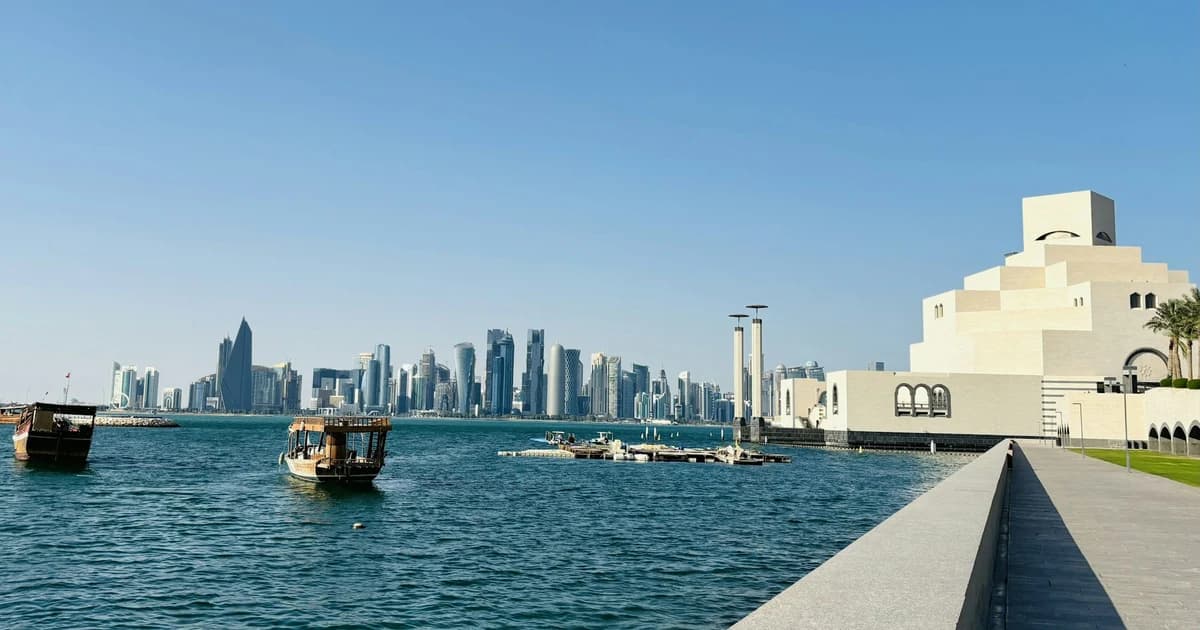
Qatar has a hot desert climate with two main seasons. From November to March the weather is mild and dry, with Doha highs of about 22°C to 30°C and cool evenings, while from May to September average highs pass 39°C and humid nights stay around 30°C. Rain is rare, about 75 to 80 mm a year, falling mostly between November and April, and dust from north westerly shamal winds is common in late spring and early summer. For today's forecast and warnings, use the Qatar Meteorology Department at qweather.gov.qa or its Q Weather app.
Visit Official ServiceOn this page
- Qatar Weather Right Now: Where to Check the Live Forecast
- Qatar Weather by Month: Climate Table
- The Seasons in Qatar
- Summer Heat, Humidity and the Midday Work Ban
- Dust Storms and Shamal Winds
- Rain and Rare Flooding
- Best Time to Visit Qatar
- Winter Evenings and the Desert
- What to Wear in Qatar by Season
- Getting Around Comfortably in Each Season
- Final Thoughts
Qatar weather runs on two settings. From November to March the country is mild, dry and bright, with Doha afternoons in the low to mid 20s °C and evenings cool enough for a light jacket. From May to September it is one of the hottest places on earth, with average highs above 39°C, warm nights that rarely drop below 28°C, and humidity on the coast that makes the air feel thick even after dark. April and October are the hinges between the two.
This guide is a climate reference rather than a live forecast. It gives month by month averages from official climate normals, explains what each season actually feels like on the ground, and shows where to check today's conditions and warnings from the Qatar Meteorology Department. The good news for planning is that the pattern barely changes from one year to the next, so the averages below are a reliable guide to any month.
Qatar Weather Right Now: Where to Check the Live Forecast
For current conditions, use the official source. The Qatar Meteorology Department (QMD) is part of the Civil Aviation Authority and publishes forecasts, observations and warnings at qweather.gov.qa. The site can be slow or unreachable from outside Qatar, so travellers abroad may find the app more reliable.
- Q Weather app: QMD's free app for iPhone and Android, in English and Arabic. It shows hourly and daily forecasts across Qatar, temperature, humidity, wind speed, wave height on the coast and at sea, and alerts for dust, strong wind and thunderstorms.
- QMD on X: the department posts daily forecasts and warnings on its account, @qatarweather, usually in both Arabic and English. During dust or rain events this is often the fastest update.
- Marine warnings: if you are planning a boat trip, kayaking or a beach day on a windy forecast, check the sea state and any marine warning first. Wave height is the figure to watch.
Phone weather apps from global providers are fine for temperature, but they often miss local dust and fog events. When QMD issues a warning, treat it as the one that counts.
Qatar Weather by Month: Climate Table
The temperatures and humidity below are the Qatar Meteorology Department's climate normals for Doha for 1992 to 2021, as summarised in the Doha climate table on Wikipedia. Rain days (days with at least 1 mm) come from the older Doha International Airport normals for 1962 to 1992, and sea temperatures are long term averages for Doha from seatemperature.org. Treat them as typical values, not promises: any single week can run a few degrees either side.
| Month | Avg high (°C) | Avg low (°C) | Sea temp (°C) | Avg humidity | Rain days | How it feels |
|---|---|---|---|---|---|---|
| January | 22.6 | 14.8 | 21 | 75% | 1.7 | Coolest month. Pleasant days, chilly evenings, damp mornings. |
| February | 24.0 | 15.8 | 19 | 73% | 2.1 | Similar to January, often windier. Best chance of rain. |
| March | 27.7 | 18.5 | 21 | 66% | 1.8 | Warm days, comfortable nights. Spring dust possible. |
| April | 33.2 | 23.0 | 23 | 57% | 1.4 | Heat builds. Fine mornings and evenings, hot by midday. |
| May | 39.4 | 28.0 | 28 | 49% | 0.2 | Summer arrives. Dry heat, strong sun, dusty winds. |
| June | 42.2 | 30.5 | 31 | 46% | 0 | Very hot, drier air, shamal winds and dust. |
| July | 42.4 | 32.1 | 32 | 53% | 0 | Hottest month on average. Warm, sticky nights. |
| August | 41.4 | 31.8 | 34 | 62% | 0 | Humid and oppressive, especially on the coast. |
| September | 39.2 | 29.7 | 33 | 63% | 0 | Still summer. Humidity peaks, little relief at night. |
| October | 35.6 | 26.5 | 31 | 66% | 0.1 | Warm and humid, easing late in the month. |
| November | 29.7 | 22.0 | 28 | 69% | 0.2 | Season turns. Warm days, lovely evenings. |
| December | 24.8 | 17.2 | 24 | 74% | 1.3 | Mild and bright. Cool nights, occasional showers. |
Two things the averages hide. First, humidity is relative: 46% in June sounds dry, but at 42°C it still carries a lot of moisture, and dew points on the coast can pass 30°C in late summer. Second, rain totals are tiny. Doha averages roughly 75 to 80 mm a year, nearly all of it between November and April, and it often arrives in one or two short storms rather than a steady wet season.
The Seasons in Qatar
Winter: November to March
This is the season people move here for and visitors come for. Doha highs sit between about 22°C and 28°C, the sun is softer, and the city lives outdoors: parks fill at weekends, the Corniche is busy at dusk, and terraces at Souq Waqif and Katara stay open late. January is the coolest month, with average lows around 15°C in Doha.
Inland is colder than the coast. On clear, still January nights the desert stations drop much further than Doha; in January 2025 QMD reported early morning lows of 4°C to 5°C at Abu Samra in the south west. Winter mornings also bring mist and fog, sometimes thick enough for QMD to issue visibility warnings, so allow extra time if you drive early on the Salwa or Shamal roads.
Spring: April and early May
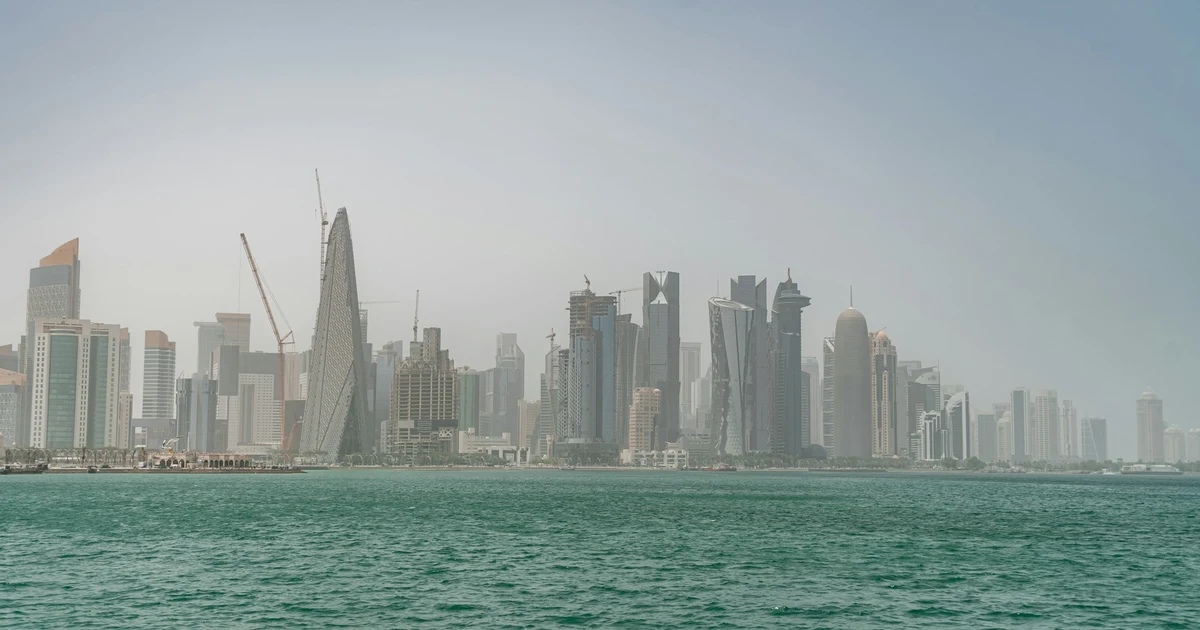
April is a short, pleasant shoulder month. Mornings and evenings are still comfortable, but by midday Doha is often above 33°C. By mid May the switch to summer is obvious: highs pass 38°C, the air dries out, and north westerly winds pick up dust.
Summer: late May to September
Summer in Qatar is long and relentless. Average highs stay above 39°C from May to September, and the highest temperature ever recorded in Qatar is commonly given as 50.4°C, in July 2010. Early summer, May and June, is hotter and drier with more wind. Late summer, August and September, is slightly less hot on paper but feels worse, because humidity rises off a Gulf that reaches about 33°C to 34°C. Nights stay at 30°C or above in July and August, so the heat never really breaks.
Autumn: October
October is still hot, with average highs around 35°C, but the change is noticeable in the second half of the month. Evenings become usable again, and by the start of November most residents have moved their weekends back outdoors.
Summer Heat, Humidity and the Midday Work Ban
Qatar's summer working hours rule is the clearest sign of how seriously the heat is taken. Under Ministerial Decision No. 17 of 2021 on protecting workers from heat stress, outdoor work in open areas, and in shaded areas without proper ventilation, is banned from 10am to 3:30pm every day from 1 June to 15 September. The Ministry of Labour confirmed the same dates and hours for 2026. The decision also says that, at any time of day or year, all work must stop if the wet bulb globe temperature (WBGT, a heat stress measure that combines temperature, humidity, sun and wind) at a workplace goes above 32.1°C, according to the ILO's summary of the decision.
If you work outdoors, these limits are your right, not a favour. The decision also requires employers to carry out heat stress risk assessments and arrange annual health checks for their workers. Workers who see the midday ban being ignored can report it to the Ministry of Labour.
Heat safety that actually works
- Shift your day. Do outdoor errands, exercise and sightseeing before 9am or after sunset. Midday is for malls and museums.
- Drink before you are thirsty. Sip water steadily through the day and add electrolytes if you sweat heavily. Tea, coffee and sugary drinks do not replace water.
- Never leave anyone in a parked car. Cabin temperatures rise to dangerous levels within minutes in summer, even with windows cracked.
- Know the warning signs. Heavy sweating, dizziness, nausea, headache and cramps point to heat exhaustion: move to a cool place, loosen clothing and drink water. Confusion, hot skin, fainting or a stop in sweating can mean heatstroke, which is a medical emergency.
- Watch the humidity, not just the number. A 38°C day in August can be more dangerous than a 42°C day in June because sweat stops cooling you when the air is saturated.
For any heat emergency, call 999 for an ambulance. Our guide to emergency numbers in Qatar lists the other numbers worth saving in your phone.
Dust Storms and Shamal Winds
The shamal is the north westerly wind that blows down the Gulf, and it is responsible for most of Qatar's dusty days. It is strongest from late May into early July, when the Gulf region traditionally expects a long spell of persistent wind and blowing dust, but winter shamals also arrive with cold fronts from roughly December to March. QMD describes June as a month of fresh to strong north westerly winds that cause blowing dust, poor visibility and high waves, with winds strongest in the day and easing in the evening.
Most dusty days are a haze that turns the sky beige and coats cars and balconies. Full sandstorms that cut visibility sharply are less common but do happen, and they can disrupt flights, sea travel and road traffic for a few hours.
- Keep windows closed and switch air conditioning to recirculate.
- If you have asthma or other breathing problems, stay indoors and keep your inhaler with you. A simple mask helps outdoors.
- On the road, slow down, turn on dipped headlights and leave a long gap. Avoid desert driving on a dust warning.
- Postpone boat trips and kayaking when QMD issues a marine warning for strong wind and high seas.
Rain and Rare Flooding
Rain in Qatar is rare, short and sometimes heavy. Most of it falls between November and April, typically on one or two days a month, and summer is almost completely dry. Storms often come with thunder, gusty wind and a sharp drop in temperature.
Because rain is so infrequent, older roads and underpasses can flood quickly when a big storm does arrive. The best known example came on 20 October 2018, when Abu Hamour in Doha recorded 84 mm in under six hours, more than Qatar's typical rainfall for an entire year. Roads flooded, schools and government offices closed and flights were disrupted. Storms like that are unusual, but they explain why authorities issue safety advisories before heavy rain.
- Avoid driving into flooded underpasses or dips; water is often deeper than it looks.
- Wadis and low ground in the desert can carry sudden runoff after storms, so skip off road trips on a rain warning.
Best Time to Visit Qatar
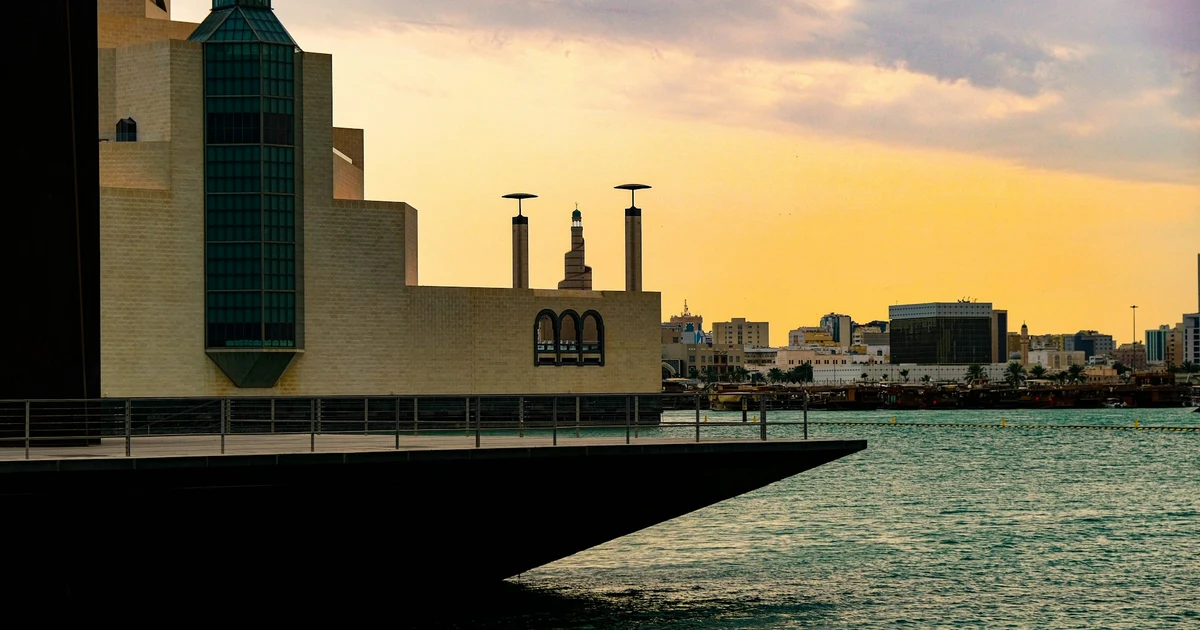
The best time to visit Qatar is November to March. Days are warm and sunny without being draining, evenings are cool, and almost every outdoor experience works: walking the Corniche, eating outdoors at the souq, beach days on calmer weeks and nights in the dunes. December to February is the coolest stretch and also the busiest, so book hotels and desert camps early for weekends and big events.
October and April are good value. Prices are often lower and crowds thinner, and you can still enjoy mornings and evenings outside as long as you plan museums and malls for the middle of the day. Summer, June to September, suits travellers who mainly want hotels, malls, indoor attractions and stopover deals; Visit Qatar runs a summer events programme aimed at exactly that.
If you are matching the weather to specific sights, the best places to visit in Qatar split neatly into outdoor spots for winter and indoor ones that work all year.
Once you have picked your month, sort out entry early. Most visitors who need a visa apply through Hayya, and it is worth going through the Hayya application steps before you pay for flights.
Events and the calendar by season
| When | What happens | Weather note |
|---|---|---|
| Late November | Formula 1 Qatar Grand Prix at Lusail International Circuit, scheduled for 27 to 29 November 2026 | Warm days, mild night racing |
| 18 December | Qatar National Day, a public holiday with celebrations across Doha | Mild days, cool evenings |
| Second Tuesday of February | National Sports Day, a public holiday with free sports activities around the country | Cool and sometimes windy |
| Around February to March 2027 | Ramadan, expected to begin around 8 February 2027, subject to moon sighting | Fasting in the coolest part of the year |
| June to August | Summer events and indoor promotions under Visit Qatar's summer programme | Peak heat, plan indoors |
Ramadan dates move about 11 days earlier each year, so for the next few years the holy month falls in Qatar's cooler season. During Ramadan, avoid eating, drinking or smoking in public during daylight hours, and expect shorter working hours by day and a lively city after iftar.
Winter Evenings and the Desert
Winter evenings are when Qatar is at its best. Once the sun goes down at around 5pm in December, Doha drops into the high teens, sea breezes pick up and the waterfronts fill.
The desert is cooler still. On the dunes near Sealine and the Inland Sea, wind and clear skies can make a January night feel cold, especially after dark and before sunrise. If you are booking a desert safari in Qatar or an overnight camp, pack a warm layer and closed shoes for the evening, even if the afternoon felt like a beach day.
What to Wear in Qatar by Season
Clothing in Qatar has to work for two things: the climate and local expectations. Visit Qatar's visitor guidance asks men and women to avoid very revealing clothes in public and generally recommends covering shoulders and knees, which also happens to be sensible sun protection.
| Season | Daytime | Evening | Do not forget |
|---|---|---|---|
| Winter (Nov to Mar) | Light long sleeves, trousers or long skirts | Light jacket, cardigan or jumper; warmer layers in the desert | Sunscreen, it is still strong |
| Spring and autumn (Apr, Oct) | Breathable cotton or linen, loose fit | Light layer for air conditioned venues | Sunglasses, refillable water bottle |
| Summer (May to Sep) | Loose, light coloured natural fabrics, covering shoulders and knees | Same, plus a thin layer for very cold malls and cinemas | Hat, high SPF sunscreen, electrolytes |
Indoor air conditioning is strong all year, so a light layer is useful even in August. If you plan to visit mosques, women will need to cover their hair, and both men and women should wear long sleeves and full length trousers or skirts.
Getting Around Comfortably in Each Season
In summer, the air conditioned Doha Metro is the easiest way to cross the city without long waits in the heat, and most central stations connect directly or almost directly to malls and attractions. Our Doha Metro map shows the lines and key stops. Use taxis or ride hailing for the last stretch rather than walking 15 minutes at 3pm. In winter, the opposite applies: walking the Corniche, Msheireb and the souq area is a pleasure, and you will see more on foot.
Final Thoughts
Qatar's weather is predictable once you know its rhythm. November to March is mild and outdoorsy, May to September is fierce, and April and October sit in between. Dust, fog and the occasional storm are the main surprises, and the Qatar Meteorology Department flags all of them in advance.
Plan with the averages, then check the Q Weather app or qweather.gov.qa a day or two before anything that depends on the weather, especially desert trips and boat outings. In summer, respect the midday heat whether you work outside or are just visiting, and save the long walks for the cool months, when Qatar is at its best.
Official Sources
- Qatar Meteorology Department (opens official source in a new tab)Official live forecasts, observations, climate information and weather warnings for Qatar.
- Q Weather app (Qatar Meteorology Department) (opens official source in a new tab)The official QMD app with hourly forecasts, sea conditions and alerts for dust, wind and thunderstorms; also on Google Play.
- Qatar Civil Aviation Authority (opens official source in a new tab)The government authority that oversees the Qatar Meteorology Department.
- ILO: Qatar's Ministerial Decision on Heat Stress (opens official source in a new tab)Summary of Decision No. 17 of 2021, including the 10am to 3:30pm summer ban and the 32.1°C WBGT stop threshold.
- Visit Qatar: climate (opens official source in a new tab)The official tourism board's overview of Qatar's seasons and the best months for outdoor activities.
- Visit Qatar: first time visitor guide (opens official source in a new tab)Official guidance on dress code, local etiquette and practical travel tips.
Frequently Asked Questions
What is the hottest month in Qatar?
July is the hottest month on average, with Doha highs around 42°C and lows around 32°C according to Qatar Meteorology Department normals for 1992 to 2021. June is almost as hot and drier, while August and September feel worse for many people because humidity rises.
What is the coldest month in Qatar?
January is the coolest month. Doha averages a high of about 23°C and a low of about 15°C, and desert areas inland can fall to around 4°C to 5°C on the coldest mornings.
Does it rain in Qatar?
Yes, but rarely. Doha averages roughly 75 to 80 mm of rain a year, mostly between November and April, usually on one or two days a month. Summer is almost completely dry. Occasional heavy storms can flood roads and underpasses.
What is the best month to visit Qatar?
November to March is the best period, with December to February the coolest. For a balance of good weather and lower prices, consider November or March. October and April are warm but workable if you plan outdoor activities for mornings and evenings.
Is Qatar too hot to visit in summer?
Summer is very hot, with highs above 40°C and humid nights, so outdoor sightseeing at midday is not realistic. Visiting is still possible if you focus on museums, malls and hotels by day and go outside only early in the morning or after sunset.
When is outdoor work banned in Qatar in summer?
Under Ministerial Decision No. 17 of 2021, outdoor work is banned from 10am to 3:30pm between 1 June and 15 September each year. Work must also stop at any time if the heat stress index (WBGT) at a workplace goes above 32.1°C.
How can I check the weather in Qatar today?
Use the Qatar Meteorology Department's website, qweather.gov.qa, or its free Q Weather app for iPhone and Android. QMD also posts forecasts and warnings on X as @qatarweather.
Written by
Sheikh Baber AliI’m Sheikh Baber Ali, a writer and editor at QatarVia. I’m naturally curious about how things work and enjoy digging into the details behind the questions people have about living, working, and getting around in Qatar. My approach is simple: research carefully, check the details, and explain things the way I’d want someone to explain them to me. I’m always looking for useful stories, changing information, and practical details worth sharing with our readers.
View all guides by Sheikh Baber Ali →Related guides
Katara Cultural Village Doha: Things to Do, Timings and Beach (2026)
A practical guide to Katara Cultural Village in Doha: how to get there on the Red Line, what is free, Katara Beach fees and rules, the amphi

Desert Safari Qatar: Inland Sea Tours, Prices and What to Expect
A practical guide to a desert safari in Qatar: how Inland Sea tours from Doha work, what they include, published price ranges, how to choose
National Museum of Qatar: Tickets, Timings and What to See (2026)
A practical 2026 guide to the National Museum of Qatar in Doha, covering opening hours, ticket prices and free entry rules, the Gold Line me
Lusail Boulevard Qatar: How to Get There, Things to Do and Events (2026)
A practical guide to Lusail Boulevard in Qatar: how to get there by metro, tram or car, when to go, what to see, the big annual celebrations