25 Best Places to Visit in Qatar (2026): Doha, Desert, Beaches & Free Spots
A practical guide to the 25 best places to visit in Qatar in 2026, covering Doha's museums and souqs, desert experiences, beaches, family attractions, free spots and hidden gems, with location, timing and entry details for each.
The best places to visit in Qatar are concentrated in and around Doha: Souq Waqif, the Doha Corniche, the Museum of Islamic Art, the National Museum of Qatar, Msheireb Downtown, Katara Cultural Village and The Pearl. Outside the city, the highlights are Khor Al Adaid (the Inland Sea) in the southern dunes, the UNESCO listed Al Zubarah pearling town in the north, and the mangroves and beaches around Al Khor. Many of them, including the Corniche, Souq Waqif, Katara and the Msheireb Museums, are free to visit.
Qatar fits an unusual amount into a small country. You can walk through a UNESCO listed pearling town in the morning, watch dunes drop into a saltwater lagoon at sunset, and end the day in a souq that has traded on the same ground for generations. Almost nothing sits more than two hours from Doha, which is why a three day stopover works here nearly as well as a full holiday.
This Qatar travel guide covers the 25 best places to visit in Qatar for 2026, grouped the way people plan a trip: Doha first, then culture and history, the desert, the coast, and family days out. Fees, hours and seasonal closures change here, so confirm details with the venue before a special trip.
Why Visit Qatar in 2026?
Qatar has quietly become the easiest country in the Gulf to visit. Citizens of more than 100 countries enter visa free for 30 or 90 days, and most others apply online through Hayya. Our guide on how to apply for a Hayya card covers that process.
Three things make 2026 a strong year to go. The winter calendar is dense, running from Lusail Winter Wonderland in late October through the Formula 1 weekend at Lusail International Circuit and a season of festivals at Katara and Msheireb. The museum scene has grown past its two headline buildings into a real circuit of galleries, heritage houses and public art. And one rental car opens the north, the west coast and the southern dunes with no internal flights.
Best Time to Visit Qatar
The short answer is November to March. Daytime temperatures then suit walking the Corniche, sitting outdoors at Souq Waqif and spending a night in the desert.
Season
Months
What to expect
Peak
November to March
Mild dry days, cool evenings. Best for desert, beaches and outdoor events. Hotels and desert camps fill on weekends.
Shoulder
April and October
Warm but workable. Fewer crowds, lower rates, fine for early morning and evening sightseeing.
Summer
June to September
Very hot and humid. Museums and malls by day, outdoor plans after sunset.
Two dates are worth checking before booking. Ramadan moves about eleven days earlier each year and falls in February in 2027, shifting daytime opening hours while making the evenings livelier. Qatar National Day on 18 December fills the Corniche and closes roads across central Doha.
Best Places to Visit in Doha
Most Qatar tourist attractions sit in the capital, and the major Doha attractions are nearly all a short metro ride or taxi hop apart. With two days, everything in this section is achievable.
1. Souq Waqif
Qatar's restored market quarter is the one place everyone agrees you have to see. Sand coloured lanes run between spice merchants, textile stalls and oud sellers, opening onto squares of restaurants and live music, with the Falcon Souq and Emiri Stables minutes away.
Location: Al Souq, central Doha, walkable from Souq Waqif metro station
Best time: After 5pm, when the lanes cool and fill. Thursday and Friday evenings are busiest
Entry: Free to enter. You pay only for food and shopping
Tip: The gold souq across the road prices by weight, so check the current gold rate in Qatar before you negotiate.
2. Doha Corniche
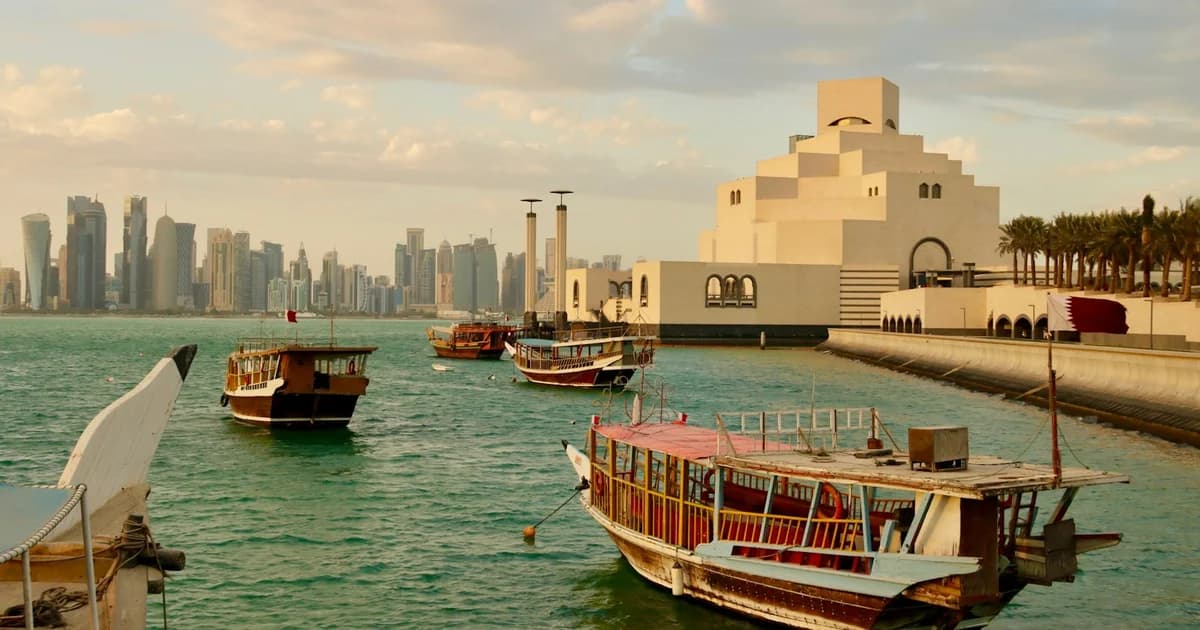
A seven kilometre promenade curving from the Museum of Islamic Art to the towers of West Bay, with wooden dhows moored on one side and a glass skyline on the other.
Location: Al Corniche Street, along Doha Bay
Best time: Sunset and the hour after. Winter mornings suit the full walk
Entry: Free, open at all hours
Tip: Walk from the museum end towards West Bay so the skyline stays ahead of you. A short dhow cruise is among the cheapest boat trips in the Gulf.
3. Museum of Islamic Art and MIA Park
I. M. Pei's limestone building on its own island is a landmark in itself, and the collection spans roughly 1,400 years of Islamic art across three continents. The atrium, with its five storey oculus and window framing the bay, justifies the visit alone.
Location: MIA Park Street, on its own island off the Corniche
Best time: Late afternoon, then stay in the park for sunset
Entry: Qatar Museums pricing has been QAR 50 for non resident adults, QAR 25 for students, and free for residents with a QID and children 16 and under. Confirm before you go
Tip: The park stays free and open on museum closing days.
4. National Museum of Qatar
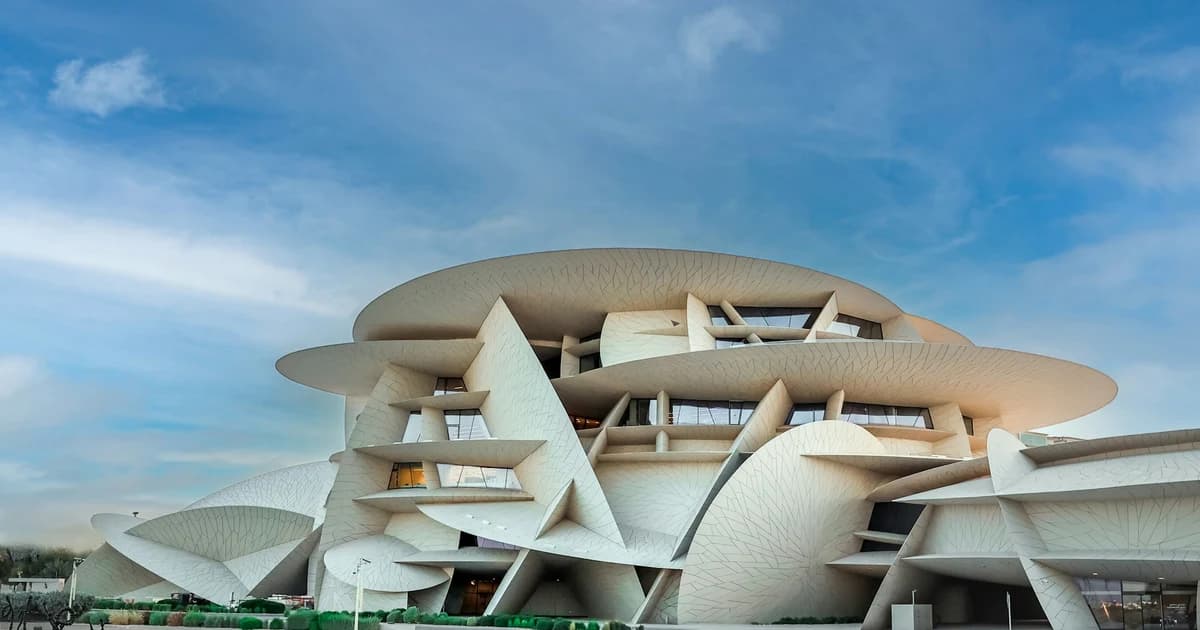
Jean Nouvel's interlocking discs, modelled on a desert rose crystal, wrap around a restored royal palace. Eleven galleries follow one route through Bedouin and pearling life and the oil era, told in wraparound film and oral histories rather than text panels.
Location: Museum Park Street, southern end of the Corniche, at National Museum metro station
Best time: Weekday mornings, before tour groups arrive
Entry: Same structure as the Museum of Islamic Art, with free entry for residents and under 16s. Verify current rates
Tip: The route runs one way and takes about two hours. Othoniel's ALFA fountain sculpture in the lagoon outside is free to see.
5. Msheireb Downtown Doha
A rebuilt city centre of low white buildings, shaded lanes and cooled walkways designed to work with the heat rather than against it. Barahat Msheireb is a vast covered square, and the Msheireb Museums fill four restored heritage houses.
Location: Msheireb, central Doha, at the metro interchange
Best time: Evenings, and any time a festival is running in Barahat Msheireb
Entry: The district and the Msheireb Museums are free
Tip: All three lines meet here, which makes it the easiest sightseeing base. Our Doha Metro map guide shows which line serves which attraction.
6. Katara Cultural Village
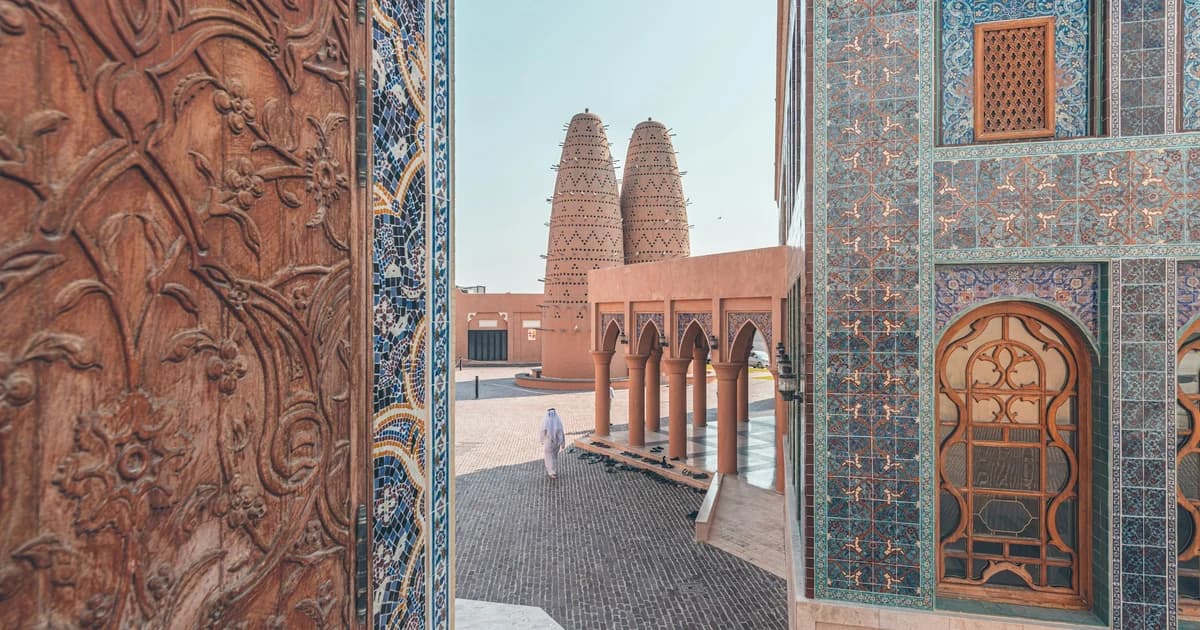
A cultural district built around a Greek style amphitheatre facing the sea. Galleries, artist workshops, two tiled mosques, pigeon towers and a planetarium sit in a compact grid, with a public beach and waterfront restaurants alongside.
Location: Katara, between West Bay and The Pearl
Best time: Late afternoon into evening, especially in the winter festival season
Entry: Free. Shows, the planetarium and beach facilities are ticketed
Tip: Climb the landscaped hills behind the village for a view over the amphitheatre and bay.
7. The Pearl Island
A man made island of marinas and themed neighbourhoods off West Bay. Qanat Quartier is the one people photograph, with pastel buildings, canals and small bridges, while Porto Arabia runs a boardwalk past superyachts and cafes.
Location: The Pearl Island, off the coast north of West Bay
Best time: Evening, when the boardwalk lights up and the heat drops
Entry: Free. Parking is mostly paid in the busier districts
Tip: Park once and walk between the districts.
8. Mina District, Old Doha Port
The old port has been reworked into a quarter of pastel warehouses, cobbled lanes and wall art, with a working fish market at one end and cafes and galleries filling the rest.
Location: Old Doha Port, just south of the Corniche
Best time: Late afternoon, or early morning to catch the fish market working
Entry: Free
Tip: Ten minutes from Souq Waqif, so the two pair into one evening.
9. Lusail Boulevard and Marina Promenade
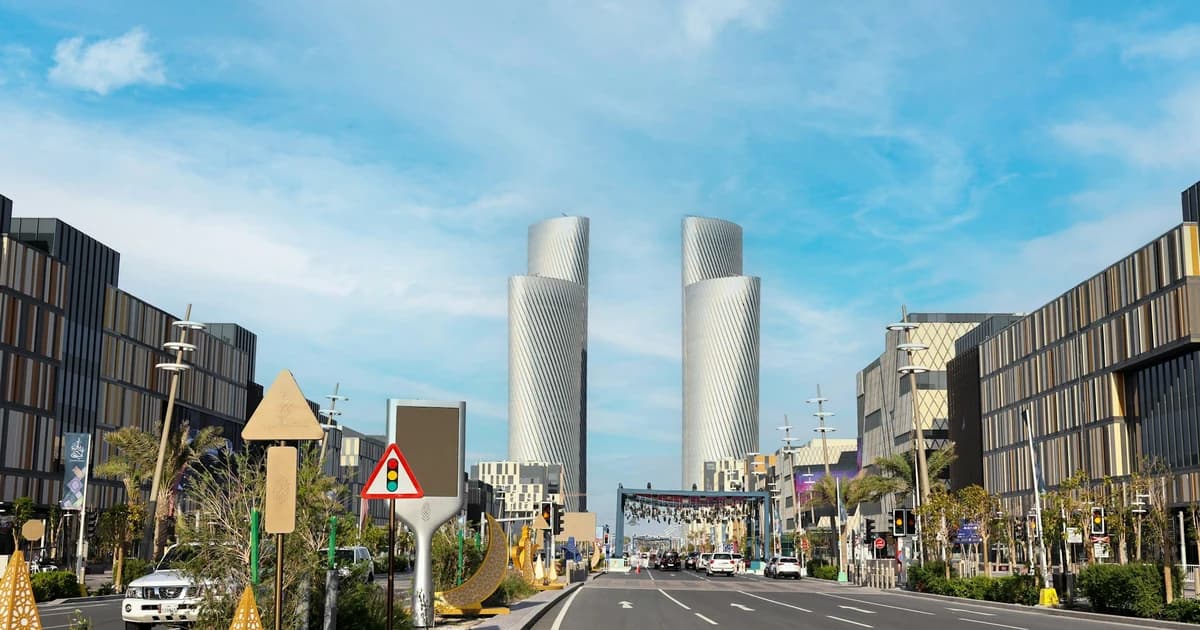
Lusail is Qatar's newest city, built around a marina and the sail shaped Katara Towers. The Boulevard is a wide pedestrian avenue of cafes, shops and light installations, with the Marina Promenade along the water below it.
Location: Lusail City, 20 km north of Doha, via the Red Line then the local tram
Best time: After dark, November to March
Entry: Free to walk. Restaurants and island attractions are priced separately
Tip: Al Maha Island next door hosts Lusail Winter Wonderland through the winter season.
Cultural and Historical Attractions in Qatar
Beyond the headline museums, Qatar's heritage sites are scattered across the peninsula, mostly free, and they make the best excuse for a road trip.
10. Education City Mosque and Qatar National Library
Education City holds two of the country's most interesting buildings. The mosque stands raised on five pillars with calligraphy across its exterior, and the library is a single folded room where the shelves form the architecture, with a sunken Heritage Library at its centre.
Location: Education City, Al Rayyan
Best time: Weekday mornings, outside prayer times for the mosque
Entry: Both are free
Tip: Dress modestly for the mosque and check whether non Muslim visitors are admitted that day. A free tram links both to Mathaf.
11. Mathaf: Arab Museum of Modern Art
Qatar's museum of modern and contemporary Arab art holds thousands of works spanning roughly the last century and a half, and rotates exhibitions often. It is far quieter than the Corniche museums.
Location: Education City, Al Rayyan
Best time: Weekday afternoons
Entry: Follows Qatar Museums policy and has included free entry at times. Check before visiting
Tip: Reach it on the free Education City tram, with the library and Oxygen Park.
12. Al Zubarah Fort and Archaeological Site
Qatar's only UNESCO World Heritage Site, inscribed in 2013. The square 1930s fort is the landmark, but the real site is the buried town behind it: one of the best preserved 18th and 19th century Gulf pearling settlements, its wall, houses and mosques mapped across the sand.
Location: North west coast, 105 km from Doha near Madinat Ash Shamal
Best time: Mornings, November to March. There is almost no shade
Entry: Ticketed, and the one Qatar Museums heritage site that requires a ticket. Check pricing and opening days
Tip: Build a northern loop with Purple Island rather than driving out and straight back.
13. Barzan Towers
Two restored watchtowers from the early 1900s, one unusual for its T shape. They guarded the surrounding wells and farmland, and were used to observe the moon to fix the lunar calendar and the start of Ramadan.
Location: Umm Salal Mohammed, 20 km north of Doha
Best time: Late afternoon, when the light on the stone is best
Entry: Free. You may be asked to sign the visitor book
Tip: Half an hour at most, so use it as a first stop heading north.
14. Al Wakrah Souq and Corniche
A rebuilt heritage souq on the beach south of Doha, in coral stone and gypsum. Lanes of shops and seafood restaurants open onto a harbour of moored dhows and a public beach, so you can browse a market then swim.
Location: Al Wakrah, 15 km south of Doha, near Al Wakra metro station
Best time: Evening, particularly Thursday and Friday
Entry: Free. Beach facilities and boat trips are paid
Tip: Take the metro and a short taxi rather than driving on weekend evenings.
Desert Experiences in Qatar
Two desert areas matter: the dune belt running south from Mesaieed to the Inland Sea, and the limestone west coast around Zekreet.
15. Khor Al Adaid, the Inland Sea
A tidal inlet from the Gulf that reaches inland until the sea sits directly against towering dunes. Protected since 2007 and on UNESCO's tentative list, it draws flamingos and turtles, with oryx in the reserve around it. The dune ridge at sunset is the best view in Qatar.
Location: South east Qatar near the Saudi border, 80 km from Doha
Best time: October to April, arriving for late afternoon and sunset
Entry: No fee for the area, but access is effectively through a paid tour
Tip: Go with a licensed operator. The route crosses soft dunes needing a 4x4, deflated tyres and real experience.
16. Sealine and the Mesaieed Dunes
The dune belt south of Mesaieed is where most safaris begin. Operators run dune bashing, sandboarding, quad biking and camel rides, then move groups to camps for dinner under the stars. It is the easiest desert trip to arrange at short notice.
Location: Sealine and Mesaieed, 60 km south of Doha
Best time: Winter weekends for atmosphere, weekdays for space
Entry: The area is free. Safaris, camps and activities are paid
Tip: Confirm what the booking includes, as meals and activities are often priced separately.
17. Zekreet Peninsula, Film City and Mushroom Rock
The west coast is a different desert: flat white limestone escarpments, wind carved rock and empty shoreline. Film City is a fortified village built as a film set and left standing, and nearby erosion has cut mushroom shaped rock that looks engineered rather than natural.
Location: Zekreet Peninsula, west coast, 80 km from Doha
Best time: Morning or late afternoon, October to April
Entry: Free
Tip: No facilities and patchy signal. Carry water, download offline maps and take a vehicle with clearance.
18. East West/West East by Richard Serra
Four steel plates, the tallest close to 17 metres, set in a line across more than a kilometre of empty desert in the Brouq Nature Reserve. Installed in 2014, it uses the flat gypsum plain as its frame, and walking between the plates gives a sense of scale photographs never capture.
Location: Brouq Nature Reserve, near Zekreet on the west coast
Best time: Sunrise, or the hour before sunset, when the plates throw long shadows
Entry: Free
Tip: There is no signage, so save the coordinates offline and combine it with Film City in one day.
Best Beaches in Qatar and Coastal Escapes
Qatar's best beaches sit north of Doha, and most are free public sand rather than resort fronts. Bring shade, because facilities outside the resorts are limited.
19. Fuwairit Beach
A wide sweep of pale sand backed by low rock formations, and one of the country's most important hawksbill turtle nesting sites. A large share of Qatar's nests are laid here each year, so the nesting area is fenced off in season.
Location: North east coast, 90 km from Doha
Best time: October to March. The nesting closure typically runs from around April into July
Entry: Free, though the protected nesting area is closed in season
Tip: Check Ministry of Environment announcements before driving up, as closure dates are set yearly.
20. Simaisma Beach
A long, calm stretch of east coast sand, far easier to reach than the northern beaches and shallow enough for young children. It fills with families on Fridays and stays quiet midweek.
Location: East coast, 45 km from Doha
Best time: Winter weekends for atmosphere, weekday mornings for space
Entry: Public stretches free. Resort beaches charge day rates
Tip: Almost no natural shade, so bring an umbrella and plenty of water.
21. Purple Island
Named for the ancient dye industry that once operated here, Purple Island is a tidal landscape of mangrove creeks, rocky outcrops and sandbars crossed by a wooden bridge. Crabs cover the flats at low tide, and flamingos feed in the channels through winter.
Location: Al Khor, 50 km north of Doha
Best time: Early morning at low tide, November to March
Entry: Free. Kayak rental is paid
Tip: Check tide times, because at high tide the walking routes disappear.
22. Al Thakhira Mangroves
Qatar's largest and oldest mangrove reserve is a maze of shallow green channels you paddle rather than walk. Kayaking it at sunrise, with herons lifting out of the trees, is the closest thing Qatar has to wilderness.
Location: Al Thakhira, north of Al Khor, 55 km from Doha
Best time: Sunrise or late afternoon, October to April, timed with a rising tide
Entry: Free at the shoreline. Guided kayak tours are paid and need booking
Tip: A protected habitat, so stay in the marked channels and keep clear of nesting birds.
23. Banana Island
A crescent shaped resort island 25 minutes offshore by ferry, with a private beach, calm water, a dive centre, water sports and overwater villas. It is the closest Qatar comes to a Maldives style beach day, and day visitors are welcome.
Location: By ferry from the Al Shyoukh terminal near Souq Waqif
Best time: November to April, on a weekday if you want it quiet
Entry: Ticketed. Ferry transfers and day passes are sold together, priced by season
Tip: Book ahead for weekends and confirm the last return sailing on arrival.
Family Friendly Places to Visit in Qatar
Qatar is easy with children. Parks are well kept and free, the metro is simple, and there is enough indoor entertainment to fill a hot afternoon.
24. Aspire Park and Aspire Zone
Doha's largest park, with 88 hectares of lawns, a lake, shaded playgrounds, running tracks and a skate park, inside Aspire Zone alongside the Torch Doha tower and the 3 2 1 Qatar Olympic and Sports Museum.
Location: Al Waab, west of central Doha, near Sport City metro station
Best time: Late afternoon and evening, year round
Entry: The park is free. The sports museum and stadium tours are ticketed
Tip: Friday evenings turn the lawns into a citywide picnic.
25. Meryal Waterpark, Qetaifan Island North
Qatar's largest waterpark covers roughly 281,000 square metres on an island off Lusail, themed around the country's oil history. Its centrepiece, The RIG 1938, holds Guinness World Records titles for the tallest water slide at just over 76 metres and for the first tower carrying twelve slides.
Location: Qetaifan Island North, Lusail
Best time: October to May. Book ahead for weekends and school holidays
Entry: Ticketed, with rates by day and season. Height limits apply on the larger slides
Tip: The Qetaifan glass bridge is close by, and Lusail Winter Wonderland runs through winter on a separate ticket.
Best Free Places to Visit in Qatar
Some of the best things to do in Qatar cost nothing at all. These free places to visit in Qatar are worth building a day around.
Doha Corniche, open at all hours, with the best skyline view in the country
Souq Waqif, including the Falcon Souq, the camel pen and the Emiri Stables
Msheireb Museums, four restored heritage houses
Katara Cultural Village, its galleries, mosques and hills
Qatar National Library and the Education City Mosque
Al Bidda Park, with cycle paths, play areas and ziplines
Flag Plaza and Box Park near the Corniche
Oxygen Park and the Qur'anic Botanic Garden in Education City
Barzan Towers, Film City and the Richard Serra sculpture
Purple Island, Simaisma Beach and most public beaches
The free trams at Msheireb Downtown and Education City
Residents get an extra advantage: Qatar Museums has offered free entry to the Museum of Islamic Art and the National Museum of Qatar on presentation of a valid QID.
Hidden Gems in Qatar
Once the Corniche and the museums are done, these are the places most visitors miss.
East West/West East in the Brouq Nature Reserve, a world class land artwork with no signage and usually no other people
Film City near Zekreet, an empty desert village left standing after filming ended
Al Thakhira mangroves at sunrise, paddled rather than walked
Bin Jelmood House at the Msheireb Museums, a direct exhibition on the history of slavery in the region
Mina District, the reworked old port, quieter than any other waterfront in Doha
Al Khor Corniche, a harbour town promenade most itineraries drive past
How Many Days Are Enough to Explore Qatar?
Three to four days covers Qatar properly. One day handles the highlights of Doha, two add the coast and the modern districts, and four reach the desert and the north without rushing.
1 day or a long stopover: Souq Waqif, the Corniche, one museum, an evening at Msheireb
2 to 3 days: add Katara, The Pearl, Lusail Boulevard and a half day desert safari
4 to 5 days: add a northern road trip taking in Barzan Towers, Purple Island and Al Zubarah, plus a beach day
6 to 7 days: add the Zekreet west coast, Banana Island and a waterpark day
If you are transiting through Hamad International Airport, check whether your layover and nationality let you leave, because even six hours covers Souq Waqif and the Corniche.
Best Places to Visit in Qatar at Night
Qatar comes alive after dark, and for much of the year evening is the only comfortable time outside.
Souq Waqif for dinner, live music and the busiest lanes of the night
Doha Corniche for the lit skyline, best from the museum end or a dhow
Lusail Boulevard for light installations and late cafes
Katara Cultural Village for evening performances and waterfront restaurants
A desert camp near Khor Al Adaid for the only dark skies within reach of the city
Qatar Travel Tips for First Time Visitors
Entry: over 100 nationalities enter visa free for 30 or 90 days. Others apply online through Hayya, and a few have extra conditions such as pre booked accommodation
Getting around: the metro is cheap and air conditioned, using a reusable travel card with low single journey and day pass fares. Karwa taxis, Uber and Careem cover the rest
Renting a car: worth it for the north, the west coast and the beaches. You only need a 4x4 for sand, and dune driving is best left to operators
Dress code: cover shoulders and knees in public, and dress more conservatively at mosques. Beachwear belongs at beaches, pools and resorts
Alcohol: served in licensed hotels and venues only, and drinking in public is an offence
Heat: from June to September treat midday as indoor time, and carry water year round for sites where shade is scarce
Money: the riyal is pegged to the US dollar and cards work almost everywhere, though souq stalls prefer cash
Ramadan: do not eat, drink or smoke in public during daylight, and expect shifted hours with lively evenings
Weekends: Friday and Saturday, with Friday mornings quiet until after midday prayers
The best places to visit in Qatar are not spread thin across a huge country. They are stacked into a peninsula you can cross in two hours, so one trip can take in a world class museum, a UNESCO pearling town, a mangrove paddle and a night in the dunes.
Plan around the season first. Come between November and March if you can, keep outdoor places for mornings and evenings, and save museums for the middle of the day. Then confirm the details, because entry fees, opening hours, seasonal beach closures and ferry timetables all change here, and a two minute check on an official site is what separates a good day out from a wasted drive.
Souq Waqif in central Doha is the attraction most first time visitors are sent to, and the best single introduction to the country. It is free to enter, open into the night, and combines a working market, the Falcon Souq, the Emiri Stables and dozens of restaurants in one walkable area. If you only have a few hours in Qatar, spend them there and on the neighbouring Corniche.
How many days do you need in Qatar?
Three to four days is enough to see Qatar properly. One day covers central Doha, two add Katara, The Pearl and Lusail, three allow a desert trip to the Inland Sea, and four to five let you drive north to Al Zubarah, Purple Island and the beaches without rushing.
What are the best free places to visit in Qatar?
The Doha Corniche, Souq Waqif, Katara Cultural Village, Msheireb Downtown and its museums, Qatar National Library, Education City Mosque, Al Bidda Park, Aspire Park, Barzan Towers, Film City, the Richard Serra desert sculpture and most public beaches are all free. Qatar residents with a valid QID have also had free entry to the Museum of Islamic Art and the National Museum of Qatar.
What is the best month to visit Qatar?
December to February is the most comfortable window, with mild dry days suited to the desert, the beaches and outdoor events. November and March are nearly as good and slightly quieter. June to September is very hot and humid, so plan indoor attractions during the day if you travel then.
Can you visit the Qatari desert without a tour?
You can reach Sealine and parts of the west coast in a normal vehicle, but the route to Khor Al Adaid crosses soft dunes and needs a 4x4, deflated tyres and real off road experience. Most visitors should book a licensed desert safari operator rather than self drive, and nobody should attempt the dunes alone.
Does Qatar have good beaches?
Yes, though the best ones are outside Doha. Fuwairit on the north east coast has the clearest water and the most dramatic scenery, Simaisma is the easiest family beach from the city, and Banana Island offers a full resort beach day reached by ferry. Public beaches have limited facilities, so bring shade and water.
Do I need a visa to visit Qatar?
Citizens of more than 100 countries enter Qatar visa free for 30 or 90 days depending on nationality, and GCC citizens enter without a visa. Everyone else applies online through the Hayya platform, and a few nationalities must book accommodation before travelling. Check your nationality on the official Visit Qatar visas page, as the list changes.
What should tourists wear in Qatar?
Dress modestly in public: shoulders and knees covered for both men and women is the practical rule. Mosques and heritage sites expect more conservative clothing, and women may be asked to cover their hair at religious sites. Swimwear is fine at beaches, hotel pools and resorts but not in souqs, malls or parks.
Is Qatar expensive to visit?
Accommodation and restaurant dining are the main costs. Sightseeing itself can be very cheap, because the Corniche, souqs, parks, heritage towers and most beaches are free, the metro costs a few riyals a journey, and the major museums charge a modest entry fee with free admission for residents and children. Desert safaris, waterparks and island day passes are where budgets usually go.
I’m Sheikh Baber Ali, a writer and editor at QatarVia. I’m naturally curious about how things work and enjoy digging into the details behind the questions people have about living, working, and getting around in Qatar. My approach is simple: research carefully, check the details, and explain things the way I’d want someone to explain them to me. I’m always looking for useful stories, changing information, and practical details worth sharing with our readers.